Skip to the main content
Ondrela.

Official Ondrela information page

Ondrela puts a tracker in the slot your wallet already has

QUICK ANSWER

Ondrela is a tracker card shaped exactly like the cards beside it, so the spare slot in a wallet becomes the place it lives. Your phone rings it on command, tells you when you have walked off without it, and shows where it was last noticed — all from software the handset already carries.

  • Rides in a card slot
  • No app, no account
  • Months between charges
  • Returnable for 60 days
  1. Open the tracker app your handset was sold with — Find My on iPhone, Find Hub on Android.
  2. Add an item and hold the card flat against the back of the phone.
  3. Name it, then forget it. Start to finish, the seller reckons on less than sixty seconds.

You finish the order on the seller's own checkout · charged once, with nothing set to repeat

  • Charged once
  • No subscription
  • Charges on a pad
  • 60-day returns

Four cards land at $24.99 each · a lone card is $44.99 · the 60-day return policy covers all four quantities · figures read on

The Ondrela gold tracker card

Week one, five checks

Everything worth confirming yourself, long before day 60

  1. Does it fit your wallet?

    Slide it into the slot you meant it for and close the wallet. This is the only fit test that counts.

  2. Can you hear it through a coat?

    Ring it from the next room with the card buried in a pocket. That is the real-world version of the alarm.

  3. Does the alert fire at a cafe?

    Leave the table, walk thirty seconds, and see how long the left-behind notification takes to arrive.

  4. Does it charge on your own pad?

    Any standard wireless pad should do it. Confirm with the one you actually own, not a borrowed one.

  5. Is there an FCC ID on it?

    Look for the identifier printed on the card. It is not on the sales page, so the card itself is where to read it.

Sixty days is plenty of time for all five. Run them in the first week and you will know before the window closes. What the card is made of

6 monthsBETWEEN CHARGES
4QUANTITIES OFFERED
$0A MONTH, FOREVER
60 daysTO CHANGE YOUR MIND
The object

What an Ondrela card is made of

A brushed shell over a circuit layer, with an antenna coil doing most of the work.

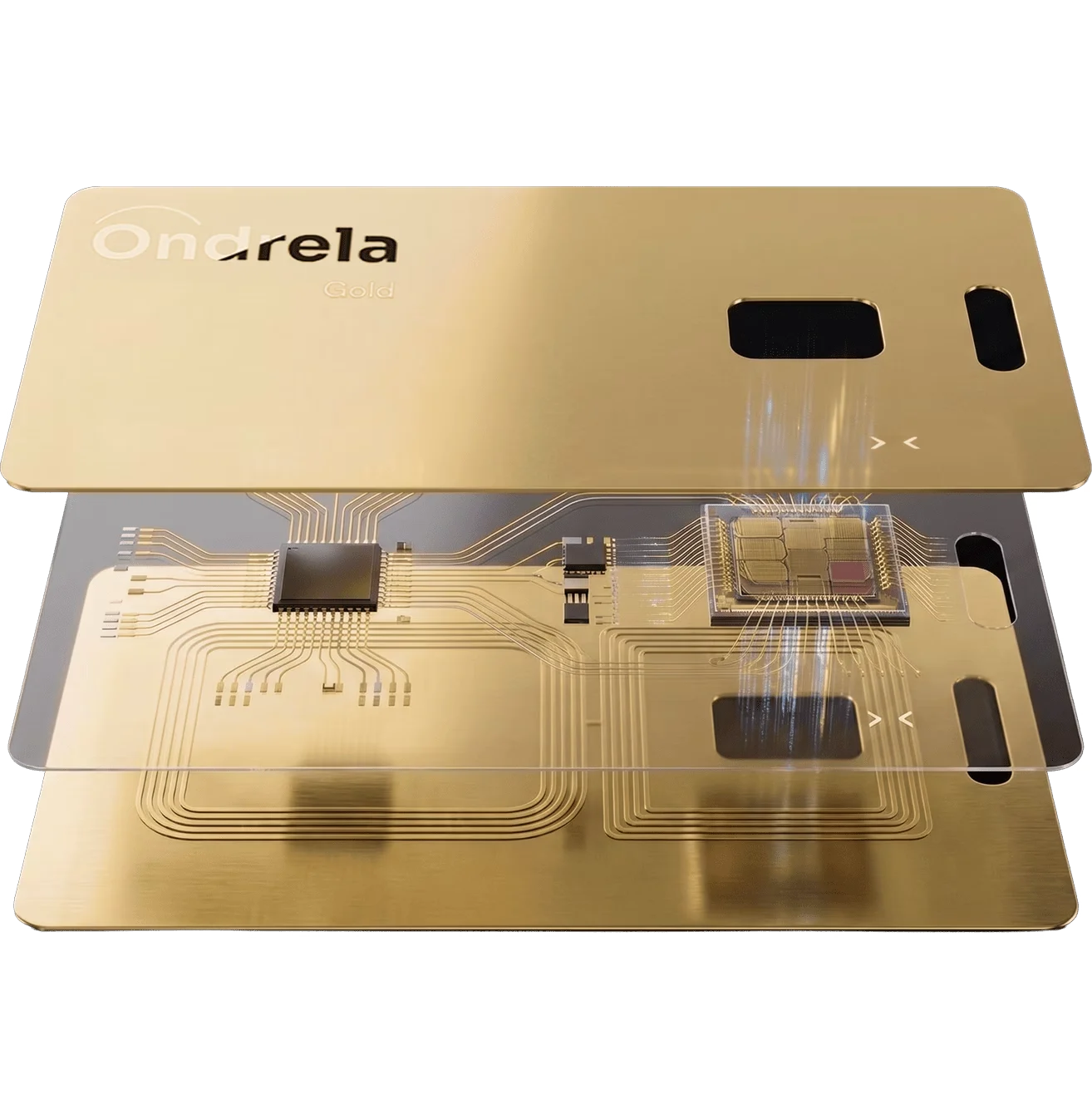
Peel an Ondrela apart and there is less in it than people expect, which is the point. A metal-finished outer shell, a thin circuit layer carrying a radio and a controller, and a printed coil that handles both the Bluetooth broadcast and the wireless charging. No display, no buttons, no battery door. Everything that makes other trackers thick has been designed out rather than shrunk.

That is why the coil matters more than the chip. It is the largest single component by area, it is what lets a flat object pick up power from a charging pad, and it is the reason the card can be sealed shut without trapping a disposable battery inside. Sealed and rechargeable is a very different proposition from sealed and disposable.

The brushed finish is not only decoration either. A card that looks like a payment card gets filed with payment cards, which is precisely where you want it. A tracker that announces itself as a gadget gets left in a drawer with the other gadgets.

The Ondrela card shown with its shell lifted away from the circuit layer
Shell, circuit layer and antenna coil — the whole parts list.

Two figures a specification sheet would normally carry are absent here. Thickness is given as a comparison to a credit card, with no millimetre figure published, and the card is called water resistant with no IP rating published alongside it. Neither is unusual at this price, and both are the sort of thing the card itself answers the week it arrives — which is exactly why the week-one checks above are worth running.

Three layers, one slot, no battery door.

Order Ondrela
In practice

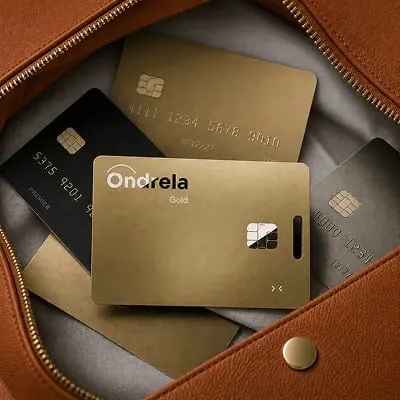
Where people actually carry an Ondrela card

Six slots a keyring fob could never reach, which is the entire argument for this shape.

SLOT 01

The wallet itself

The obvious one, and the one with the strongest case: a wallet is flat, silent and carries the items that are most tedious to replace.

SLOT 02

A passport holder

Travel documents live in a sleeve with spare card slots. One of them has been empty since you bought it.

SLOT 03

A laptop sleeve

Most sleeves and messenger bags have a flat document pocket. A fob rattles there; a card lies down and stays put.

SLOT 04

A camera bag divider

Slides behind a padded divider without taking space from a lens, and without a lanyard catching on anything.

SLOT 05

The glovebox folder

Goes in with the registration documents, flat against the paperwork, where nothing is going to dislodge it.

SLOT 06

A hard instrument case

Under the lining or in the accessory tray of a guitar or camera case — somewhere a thief is unlikely to look first.

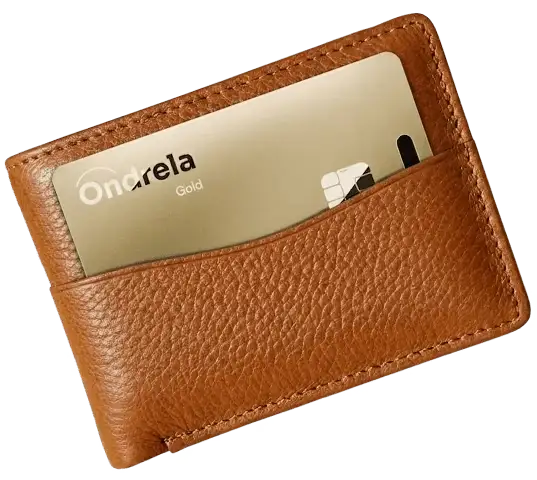
An Ondrela card sitting in a wallet card slot
One slot occupied, and the wallet still shuts the way it always did.

Six slots, and the per-card price falls as you fill them.

Order Ondrela
Close range

The Ondrela alarm does most of the real work

Most things are not lost. They are twelve feet away and saying nothing.

Ask anyone who owns a tracker which feature they use and they will say the noise. Searches overwhelmingly end inside one room of where they began: the wallet has slid under a newspaper, gone into yesterday's jacket, or dropped between a seat and the handbrake. None of that is a mapping problem. It is a hearing problem, and a card you can order to make a sound solves it in seconds.

It is also the feature with the fewest conditions attached. Ringing needs nothing but your handset and Bluetooth range, so it works in a basement, on an aeroplane and in a house whose broadband has fallen over. Everything involving a map asks considerably more of the outside world, which the map section below sets out honestly.

The fastest answer to "where did I put it".

Order Ondrela
Middle range

When an Ondrela separation alert reaches you

The gap between leaving something behind and being told about it is the whole measure of this feature.

Think of it as a tap on the shoulder from your own pocket. Your handset keeps half an eye on the card, and when the two part company it says so. People who fly, commute or work from cafes rate this above everything else the card does, because the places you abandon a wallet are the places you leave while thinking about a train.

The lag is worth knowing about rather than discovering. Handsets deliberately batch background Bluetooth work to protect their own charge, so the warning surfaces shortly after you separate instead of the moment you stand up. Catching something still inside the building it was left in: excellent. Catching something after you have joined the motorway: considerably less so. The week-one cafe test at the top of this page is how you find out which side of that line your own phone falls on.

Long range

How an Ondrela card reaches a map

The part most tracker pages hurry past, and the part worth understanding before you spend anything.

WHAT IT LOOKS LIKE

A pin on a map, anywhere in the country.

WHAT IS ACTUALLY HAPPENING

Borrowed eyes, not satellites

There is no satellite receiver and no SIM in a card this thin, and there could not be. What the card emits is a short Bluetooth signal, and any passing handset that takes part in the network quietly relays the sighting along. The pin you see marks where that stranger's phone was, not where your card is, and it is good to roughly the width of a street.

Every tracker in this format works the same way, including the ones made by Apple and Google. It is not a flaw peculiar to this card. It does mean the map is a lead to follow rather than an address to drive to.

WHERE IT SHINES

Wherever there are plenty of other phones.

AND WHERE IT DOES NOT

Busy pavements beat empty roads

Because the network is other people's handsets, coverage tracks population. A wallet dropped on a city street usually reports within minutes. The same wallet on a quiet trail may say nothing for hours, because nothing has walked past it to listen. Judge the feature against the places you genuinely lose things.

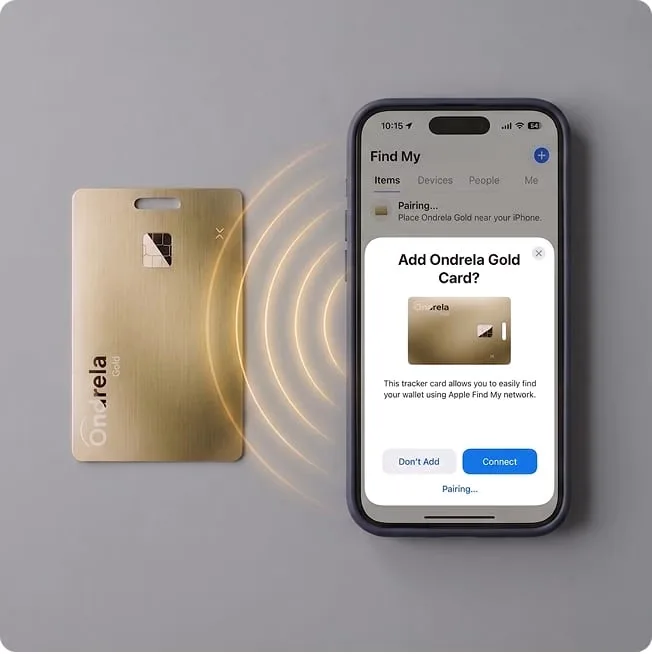
The Ondrela card shown in a phone tracker app
The card joins the item list in software the handset already runs.

Honest about the map, useful at every range.

Order Ondrela
Setup

Getting an Ondrela card onto your phone

There is one job to do before the parcel lands and three once it has.

Do this bit first, while the card is still in transit: open your tracker app, confirm you are signed in, and check that item tracking is switched on. Almost every story about a fiddly setup is really a story about discovering an expired sign-in with a parcel open on the kitchen table.

  1. Launch the app that shipped with the handset

    iPhone and iPad owners want Find My; Android owners want Find Hub. Neither needs installing and neither asks for a fresh login, and that absence is the clearest single difference between this card and most of what sits beside it on a shelf.

  2. Start an add, then touch card to phone

    Pick the option to add an item, then lay the card flat on the back of the handset. Nothing needs typing. The phone announces itself when the pair have recognised each other, which takes a couple of seconds rather than a couple of minutes.

  3. Label it after whatever will carry it

    Wallet. Passport. Camera bag. Whatever you type here is the word your phone will read back to you later when it decides the card has been left somewhere, so a vague label costs you time at the worst possible moment.

Three steps, and the first one is free.

Order Ondrela
Power

What six months of Ondrela battery really means

Published as six months a charge, which lands differently depending on where the card spends its year.

Half a year between top-ups changes the category of the chore. Nobody schedules maintenance twice annually; you simply notice the card on the pad one morning alongside the earbuds and think nothing more about it. Compared with hunting down a coin cell of a size you cannot remember, that is a meaningful upgrade rather than a specification bullet.

Where the figure moves is use and temperature. A card pinged dozens of times a week by an anxious owner draws more than one sitting quietly in a document wallet, and lithium chemistry of every kind reports lower numbers out of a freezing coat pocket than off a warm desk. Six months is the seller's claim under ordinary conditions. Your own first cycle is the figure to plan around.

The structural point is that refilling is possible at all. A sealed card wrapped around a cell that cannot be reached or refilled has a hard expiry date built into it; this one goes back on the pad. Which pad barely matters, provided it is a standard one, and the week-one check at the top of this page exists so you confirm that with your own rather than a borrowed one.

Claimed endurance

Six months from a single charge, as published on the official site.

How it refills

Flat on a standard wireless pad. No cable, no cradle and no dock specific to this product.

Swapping the cell

Does not arise. Nothing opens, so there is no battery size to look up and nothing to buy.

Warning before it dies

No low-battery alert is documented. Two fixed dates in a calendar is the most reliable substitute.

Two top-ups a year, on hardware you already own.

Order Ondrela
The numbers

Six numbers that explain Ondrela

Specifications are dull. These six are the only ones that change a buying decision.

ENDURANCE

6

Months between charges, as published. Enough that you will forget the card has a battery at all until the pad reminds you.

INSTALLATION

1

Card slot consumed. Payment-card footprint means the wallet shuts on exactly the fold it always shut on.

DOWNLOADS

0

Apps added to your phone. It reports into tracking software your handset already runs, with no new password anywhere.

COMMITMENT

$0

Owed per month, now or later. The official FAQ is explicit that nothing recurs and nothing needs cancelling.

SECOND THOUGHTS

60

Days of return policy, identical on one card and on four. Long enough to run every check at the top of this page.

FLOOR PRICE

$24.99

Per card at the four-card quantity. Buy a single card instead and it costs $44.99 on its own.

Prices

What an Ondrela card costs at each quantity

The headline price is per card, and it slides a long way between buying one and buying four. Every figure below came off the seller's order page on .

1 card

$44.99EACH

54% of the $82.99 benchmark

$44.99 all in, against a listed $82.99.

$38.00 below it · 46% off

Order 1 card

2 cards

$34.99EACH

42% of the $82.99 benchmark

$69.98 all in, against a listed $165.98.

$96.00 below it · 58% off

Order 2 cards

3 cards

$29.99EACH

36% of the $82.99 benchmark

$89.97 all in, against a listed $248.97.

$159.00 below it · 64% off

Order 3 cards
LOWEST PER CARD

4 cards

$24.99EACH

30% of the $82.99 benchmark

$99.96 all in, against a listed $331.96.

$232.00 below it · 70% off

Order 4 cards

Where the crossed-out numbers come from

One figure, $82.99, multiplied by the quantity. Two cards become $165.98, three become $248.97 and four become $331.96. Run the division yourself and all four discount percentages fall out of that single number.

Getting it to you

Priced during checkout, not on the product page, so the carrier charge only appears once your address has been entered.

Sales tax

Flagged on the order page as something that may be added above the prices listed here.

Anything repeating

Nothing, at any quantity. The seller's FAQ rules out subscriptions outright, so the number you see is the number you pay once.

If you change your mind

Sixty days, and the window is the same whether you bought one card or the full set of four.

A word about $82.99, since every percentage on this page leans on it. That figure is the seller's own, and the FTC's Guides Against Deceptive Pricing set a test for former prices: one counts only where it is the actual, bona fide price at which the article was offered to the public on a regular basis for a reasonably substantial period of time. The Guides name the opposite case too, where an artificial, inflated price was established for the purpose of enabling the subsequent offer of a large reduction. No page outside the company can check how long $82.99 was genuinely charged, so weigh the cash figure in the left column of each card and treat the percentage as decoration.

Four cards, $99.96, and the lowest per-card price on offer.

Order Ondrela
The comparison

Ondrela or the keyring fob in your pocket

Not really rivals. Two different installations of the same idea, suited to different objects.

THE FOB

Hangs off something. Usually a swappable coin cell and a louder speaker.

WHERE THE CARD WINS

Anything flat, anything with a slot

A fob cannot enter a wallet, a passport sleeve or a document pocket without creating a lump that stops the thing closing. The card goes into all of them and changes nothing. If what you keep mislaying is flat, this is not a close contest.

THE CARD

Rides in a slot. Rechargeable, and about the thickness of a bank card.

WHERE THE FOB WINS

Keys, volume and a shop-bought battery

Keys already have a ring, so a fob installs instantly. Fobs also have more room for a speaker, which makes them louder, and a user-replaceable cell turns a dead tracker into a two-minute fix. The honest advice is to choose by the shape of the thing you lose.

Flat things want a card. Keys want a fob.

Order Ondrela
Privacy

Ondrela and the alerts that fire on other people's phones

Small enough to hide means small enough to abuse. Both companies that run these tracking networks now build unwanted tracking alerts straight into the handset, and they apply to this card exactly as they apply to any other.

IF THEY CARRY AN IPHONE

Apple's warnings cover its own accessories and, since 2024, unknown trackers of other makes.

IN APPLE'S OWN WORDS

A tap leads straight to the serial number

Apple's personal safety guide directs anybody who receives one of these warnings to follow these steps to find the item. Tapping through opens a page carrying the device's serial number or ID, from which the recipient can trigger a sound to hunt it down or pull up the maker's own instructions for switching it off.

On coverage, Apple writes that warnings about unknown Bluetooth tracking devices are available on an iPhone with iOS 17.5 or later. Warnings about accessories on Apple's own network reach back considerably further, to iOS 14.5.

IF THEY CARRY AN ANDROID

Google runs an equivalent system, and it reaches a much older install base.

IN GOOGLE'S OWN WORDS

It draws the route the tracker took

Google's help page explains that such a notification means a tracker that's not yours might be moving with you, and that opening it will show you a map where the tracker was detected moving with you. The recipient can sound it without the owner learning anything, and Google records that the feature is only available for devices with Android 6 and up.

The same page punctures a common assumption. Killing Bluetooth, killing location services or flipping into aeroplane mode leaves a tracker reporting regardless. Stopping one means doing what its manufacturer says, not what feels intuitive.

Built to be discoverable. Use it on things you own.

Order Ondrela
The rules

Ondrela, consent and criminal liability

Keeping tabs on your own luggage raises no legal question whatsoever. Keeping tabs on a person who has not agreed to it raises several.

Congress has passed nothing aimed at consumer trackers as a category, which misleads people into assuming the area is unregulated. It is not. State statutes on stalking, harassment and electronic surveillance already describe this conduct in terms broad enough to catch it, charges have been brought on those grounds, and the physical size of the device has never been a defence. Anyone weighing up slipping one of these into a car that is not theirs needs a lawyer, not a product page.

Where somebody suspects the reverse — that a device has been planted on them — the Safety Net Project at the National Network to End Domestic Violence is the authority worth reading. It notes that newer location tracking devices are small and can be hidden in a bag or backpack, or in gifts, and counsels anyone in that position to document what is happening if it feels safe, before you make any changes. Its sharpest warning is the one a retailer would never print: making changes will often alert the other person, and they might become more abusive.

That last sentence is the reason this page does not tell anyone to simply rip the device out. If this describes your own situation, that organisation and a trained advocate are far safer starting points than a search engine.

Expectations

Four things to stop expecting from an Ondrela card

None of these is a defect. All four are easier to accept before the parcel arrives than after.

LIMIT 01

Nothing here talks to a satellite

There is no GPS chip and no mobile data connection inside it. Everything on the map arrived courtesy of a stranger walking past, which is why an empty lane reports nothing for hours.

LIMIT 02

It is not an anti-theft system

Somebody who lifts the cash and bins the wallet has thrown your tracker away with it. Whatever the map shows is a line for a police report, not an address to knock on.

LIMIT 03

Strangers will be told it is there

The alerts described further up are deliberate, and they apply to this card like any other. Discretion is not a feature any tracker in this format can honestly sell you.

LIMIT 04

Paperwork is missing from the listing

Neither an FCC ID nor an IP rating appears before purchase. Since the FCC states that radio frequency devices are required to be properly authorized under 47 CFR part 2 prior to being marketed or imported, the ID should be on the card itself: look for it.

Four plain limits, and two months to weigh them.

Order Ondrela
After the sale

Sending an Ondrela card back

Two months is the published figure, and it does not shrink because you only bought one card.

A 60-day return policy is advertised on the official site, with the mechanics kept in a separate returns and refunds document rather than beside the buy button. As windows in this category go it is a long one. The fine print — original packaging or not, who is out of pocket for the postage back — is the part to settle while you still have the option, which in practice means reading it the day the card arrives rather than on day fifty-nine.

Here is the useful trick: two months is almost exactly how long it takes to discover whether a habit has formed. Drop a reminder in for day fifty. By then the card has either rung once and rescued an afternoon, in which case keep it, or it has sat untouched in a drawer, in which case you still have ten days in hand.

Sixty days, whichever quantity you pick.

Order Ondrela
Ordering

What ordering an Ondrela card involves

Pulled from the seller's order page and FAQ, with nothing added that is not published there.

How you are billed

Once, at the checkout. The FAQ is explicit that no subscription sits behind the purchase and that nothing recurs afterwards.

How many you can buy

One, two, three or four cards. Each quantity carries its own per-card price, listed in full above.

Postage

Worked out during checkout. Because no figure is printed beforehand, you will not see the carrier charge until your address goes in.

How long it takes

Undocumented on the product page. An order tracking page is provided, which is where a dispatched parcel can be followed.

Tax

May be added on top, which the order page states rather than leaves to be discovered.

Changing your mind

Covered by the 60-day return policy on all four quantities, with conditions held in the seller's returns document.

Guarantee against faults

No warranty is published anywhere on the product page. The return window is the only stated remedy if something stops working.

One charge, four quantities, no renewals.

Order Ondrela
Support

Getting hold of the Ondrela team

Two published channels, and one thing worth clearing up before any money changes hands.

A telephone number sits on the official site, +1 970-236-2765, alongside a contact form at try-ondrela.com/contact. Parcels already dispatched can be followed through the seller's order tracking page. That is the full extent of what has been published, which means a refund request travels by phone or by form and by nothing else.

Ask this one before you order rather than after: inside the 60-day window, who pays to post the card back, and does it have to arrive in the packaging it left in? Neither answer appears beside the price. Both live in the returns document, and both are considerably cheaper to learn while the box is still sealed.

Answers

Ondrela, question by question

Ten things buyers ask, each answered from the seller's published pages or from the platform documentation quoted earlier.

What exactly is Ondrela?

Ondrela is a tracker manufactured in the footprint of a bank card so that a wallet slot can hold it. Rather than shipping software of its own, it enrols in the tracking app already present on iPhone and Android handsets, and the published charge interval is roughly half a year.

What will an Ondrela card cost me?

Buying one costs $44.99. At two the per-card price falls to $34.99, totalling $69.98; at three it is $29.99 each, or $89.97; at four it reaches $24.99 each for a total of $99.96. That last figure sits 70% under the $82.99 per-card reference the seller publishes.

Will I have to install anything for Ondrela?

Nothing at all. According to the official FAQ no dedicated app and no account are needed, because enrolment happens inside Find My on Apple hardware or Find Hub on Android. That is the reason the published setup time is measured in seconds rather than minutes.

Does Ondrela bill me every month?

It does not. The company states plainly that there are no monthly fees and no subscriptions behind the product, and describes the checkout as a one-off payment for hardware. Across all four quantities there is nothing to cancel at any later date.

How often will I be charging an Ondrela card?

Roughly twice a year, on the strength of the published six-month figure, using any ordinary wireless charging pad. Bear in mind that heavy pinging and cold weather both shorten real-world numbers in this category, so your own first cycle is a better guide than the claim.

Is satellite positioning built into Ondrela?

No, and a card of this thickness could not house it. The card emits a short Bluetooth signal which nearby handsets pass along, meaning the marker you see belongs to somebody else's phone. Apple and Google both build their own trackers on precisely this principle.

Can an Ondrela card get wet?

The listing describes it as water resistant and suited to daily use, but attaches no IP rating to that description. A claim without the two-digit grade behind it is a characterisation rather than a measurement, so plan for rain and spilled coffee, not for a swimming pool.

Would somebody else's phone spot an Ondrela card?

Almost certainly, because both platforms try hard to make that happen. Apple raises warnings about unknown Bluetooth trackers from iOS 17.5 onward and Google does the same from Android 6 onward, in each case offering the recipient a sound to play and instructions for disabling the device.

What if I want to return my Ondrela card?

The published 60-day return policy applies to every quantity, including a single card. Specific conditions are held in a separate returns and refunds document on the seller's site, which is the place to check who covers return postage before you send anything.

Is one Ondrela card enough?

Work it out from your own possessions: tally the flat items whose loss would ruin a week, such as a wallet, a passport, a laptop sleeve or a camera bag. Given the slide from $44.99 down to $24.99 a card, covering several slots usually costs less per item than protecting just one.
Ten answers, every one traceable to a published page.

Order Ondrela
Plain English

The Ondrela vocabulary, decoded

Six expressions this page and every rival page lean on, in ordinary words.

Finding network

Shorthand for the millions of strangers' handsets that will silently forward a tracker's signal on its owner's behalf. It explains how a chip with no satellite link produces a map pin, and why busy streets outperform quiet ones.

Left-behind alert

The nudge your phone sends on realising the tracker is no longer travelling alongside it. Some manufacturers call the same thing a separation alert.

Unwanted tracking alert

The same technology pointed the other way, warning a person that something not belonging to them seems to be following them around. Apple and Google each operate one.

IP rating

A pair of digits, IP67 being the familiar example, certifying how much dust and water a device tolerates. Nothing of the sort is published for this card, hence water resistant rather than waterproof throughout this page.

FCC ID

A code showing a radio product has cleared United States authorisation. The regulator requires it before anything is marketed or imported, and manufacturers normally print it onto the hardware.

Reference price

Whatever higher number a discount is calculated against. On this product it is $82.99 a card, supplied by the seller rather than observed independently anywhere.

Disclosure

Where this Ondrela page gets its facts

Source by source, plus the commercial interest sitting behind every orange button.

Feature descriptions, the charge interval and the 60-day policy were taken off the official Ondrela product page on . The four prices, the $82.99 benchmark and the warning about tax came from the company's order page the same afternoon. No percentage on this page was copied: each was divided out again here, which is why every one reconciles against that single benchmark figure.

Claims about how this class of hardware behaves were deliberately sourced away from the seller. Equipment authorisation comes from the FCC. The behaviour of unwanted-tracking warnings comes from Apple's personal safety guide and Google's Android help pages. Guidance for anyone who fears they are being followed comes from the Safety Net Project at the National Network to End Domestic Violence. The test for a struck-through former price comes from the FTC's own pricing guides. Each one is linked exactly where it is relied on.

Finally, the commercial part. This is a landing page and makes no pretence of being a review: there is no score anywhere on it, no star rating, no verdict and no rating markup in the structured data behind it. The buy buttons are affiliate links, so a purchase earns this site a commission from the seller. Your total is identical either way, and the limits and privacy sections above would read the same if the commission did not exist.

$24.99 a card at the four-card quantity $99.96 all in, 70% under the reference figure, returnable for 60 days

Order Ondrela